
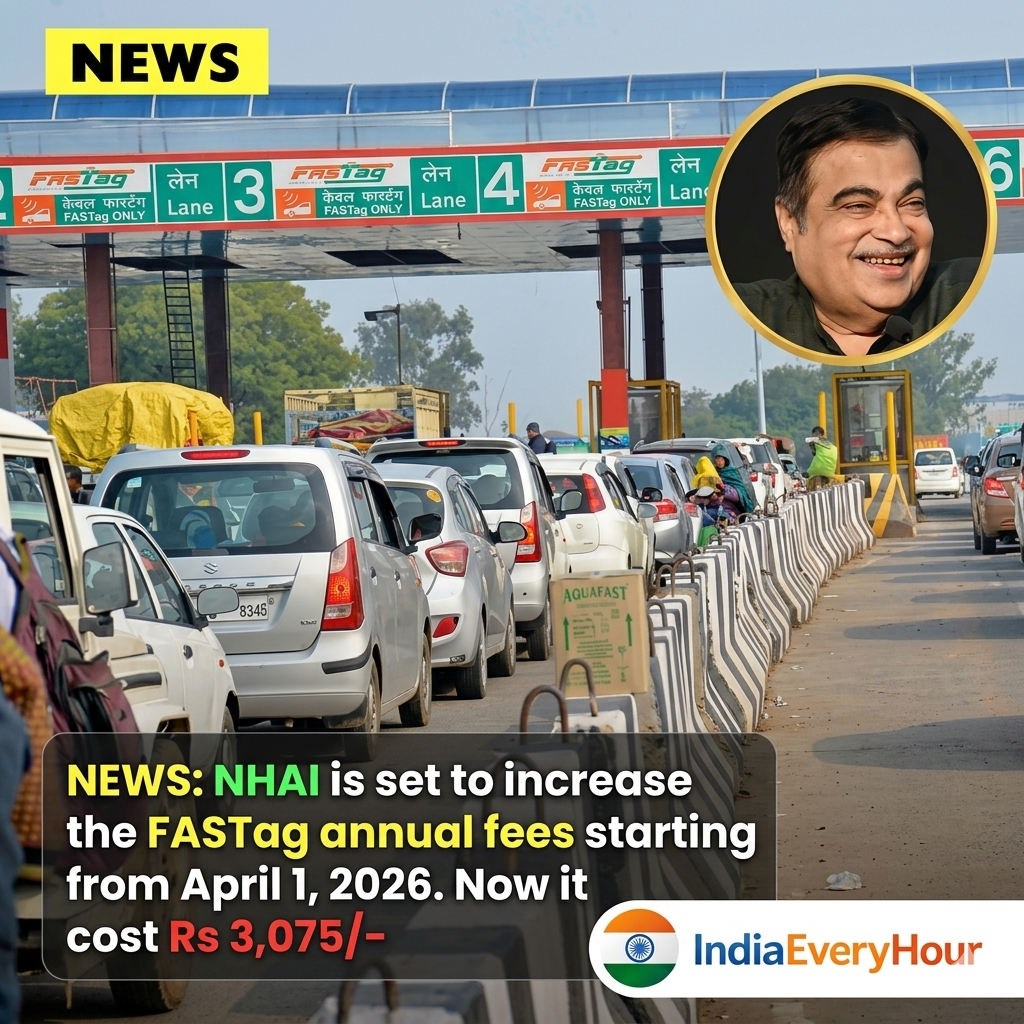
NHAI has increased FASTag annual fees to ₹3,075 from April 1, 2026. Know the new charges, reasons behind the hike, and its impact on commuters.
FASTag Annual Fee Hike 2026: What the ₹3,075 Charge Means for Indian Drivers
In a major update for millions of highway commuters, the NHAI has reportedly increased the annual FASTag fee to ₹3,075, effective from April 1, 2026. This move has sparked widespread discussion among vehicle owners across India.
FASTag has been a key part of India’s digital toll collection system, enabling seamless travel across highways. However, with this price hike, many are questioning its impact on daily travel expenses.
🚗
What is FASTag and Why Is It Important?
FASTag is an electronic toll collection system that uses RFID technology to enable automatic toll payments. It is mandatory for all vehicles on national highways in India.
🔹 Key Benefits:
- Cashless toll payments
- Reduced waiting time at toll plazas
- Fuel savings due to less idling
- Digital transaction tracking
Since its nationwide implementation, FASTag has significantly improved traffic flow and reduced congestion at toll booths.
💸
FASTag Fee Hike: What’s Changing?
According to recent reports, the new FASTag annual fee will be:
👉 ₹3,075 per year
📅 Effective Date:
- April 1, 2026
This marks a noticeable increase compared to previous charges, though exact earlier pricing varied depending on the issuing bank.
📊
Why Has NHAI Increased FASTag Fees?
There are several possible reasons behind this hike:
🔧
1. Infrastructure Development
India is rapidly expanding its highway network. Increased funds are needed for:
- Road maintenance
- New expressway construction
- Toll system upgrades
📡
2. Technology Upgrades
NHAI is working on advanced tolling systems such as:
- GPS-based toll collection
- Barrier-free tolling
These upgrades require significant investment.
💰
3. Inflation and Operational Costs
Rising operational costs and inflation may have contributed to the fee increase.
🚨
Impact on Common People
The fee hike will directly affect:
🚗
Private Vehicle Owners
Daily commuters may see increased yearly expenses.
🚛
Commercial Vehicles
Higher costs could lead to increased transportation charges, indirectly affecting goods prices.
🏙️
Urban Commuters
People traveling frequently on highways will feel the impact the most.
🧠
Is FASTag Still Worth It?
Despite the hike, FASTag still offers several advantages:
✔ Saves time at toll plazas
✔ Reduces fuel consumption
✔ Enables smooth travel
Compared to manual toll payments, FASTag remains a more efficient system.
⚖️
Public Reaction
The announcement has triggered mixed reactions:
👍 Support:
- Better infrastructure justification
- Improved highway facilities
👎 Criticism:
- Increased financial burden
- Lack of clarity on pricing structure
Many users are demanding transparency from authorities.
🔮
Future of Toll Collection in India
India is moving toward a fully digital toll system. Upcoming changes may include:
- GPS-based toll collection
- Removal of physical toll booths
- Dynamic pricing based on distance
These advancements aim to make travel more efficient and fair.
📊
Expert Opinion
Experts believe:
- The hike is part of long-term infrastructure planning
- Digital tolling will improve efficiency
- Short-term inconvenience may lead to long-term benefits
📌
Conclusion
The FASTag annual fee hike to ₹3,075 is a significant development for Indian commuters. While it may increase travel costs, it also reflects the government’s push toward better infrastructure and advanced tolling systems.
For now, vehicle owners should stay informed and plan their travel expenses accordingly.