
India is preparing DPRs for 3 new bullet train corridors by March 2027. Discover routes, project details, benefits, costs and what it means for future travel in India.
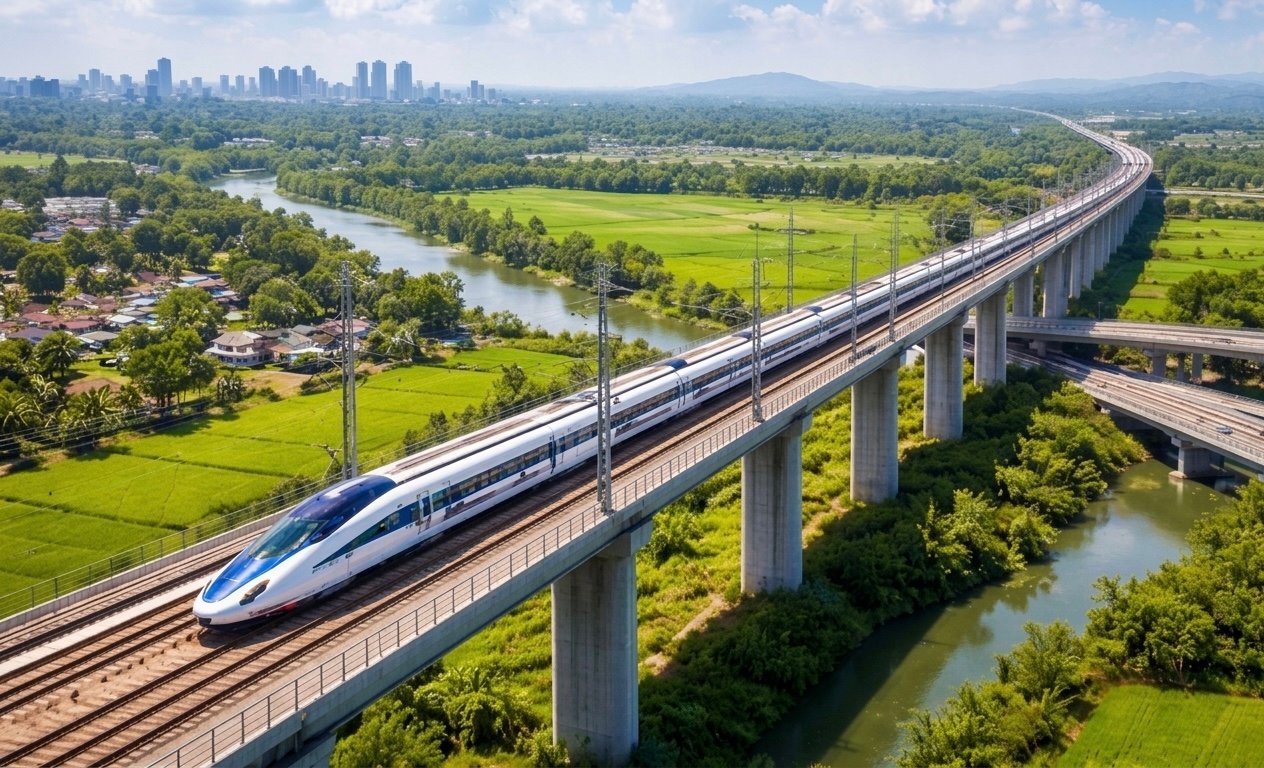
India’s ambition to transform its transportation infrastructure is taking a major leap forward with the development of high-speed rail networks. After the ongoing Mumbai–Ahmedabad bullet train project, the government is now planning Detailed Project Reports (DPRs) for three new high-speed rail corridors, expected to be ready by March 2027.
This move signals India’s strong commitment to modern, fast, and efficient rail connectivity that can rival global standards. With bullet trains capable of speeds over 300 km/h, these projects aim to drastically reduce travel time, boost economic growth, and enhance connectivity between major cities.
What Are High-Speed Rail Corridors
High-speed rail corridors are specially designed railway routes where trains operate at speeds typically above 250 km/h. Unlike conventional rail, these tracks are built with advanced technology, dedicated infrastructure, and enhanced safety systems.
Countries like Japan, China, and France have successfully implemented bullet train networks, and India is now moving in the same direction to modernize its transportation system.
3 Proposed Bullet Train Corridors in India
The government is currently focusing on preparing DPRs for three major corridors. While final approvals are still pending, the likely routes under consideration include:
1. Delhi to Varanasi Corridor
This corridor aims to connect the national capital with one of the most important cultural and religious cities in India.
Key Benefits
- Significant reduction in travel time
- Boost to tourism in Varanasi
- Improved connectivity for eastern Uttar Pradesh
2. Mumbai to Nagpur Corridor
This route is expected to connect Maharashtra’s financial capital with its central region.
Key Benefits
- Faster business travel
- Support for industrial development
- Integration with existing expressways
3. Chennai to Mysuru Corridor
This southern corridor could connect major cities in Tamil Nadu and Karnataka.
Key Benefits
- Enhanced regional connectivity
- Boost to IT and manufacturing sectors
- Reduced congestion on roads and flights
What Is a DPR and Why It Matters
A Detailed Project Report (DPR) is a comprehensive document that outlines every aspect of a project, including:
- Route alignment
- Estimated cost
- Technical feasibility
- Environmental impact
- Land acquisition requirements
The preparation of DPRs is a crucial step before construction begins. It helps the government assess whether the project is viable and ensures proper planning.
Current Status of Bullet Train Projects in India
India’s first bullet train project between Mumbai and Ahmedabad is already under construction. It is being developed with technical and financial assistance from Japan.
Highlights of the Mumbai–Ahmedabad Project
- Expected top speed of 320 km/h
- Travel time reduced from 7 hours to around 2 hours
- Advanced Japanese Shinkansen technology
The progress of this project will play a key role in shaping future high-speed rail developments across the country.
Expected Timeline
The government aims to complete the DPRs for the three new corridors by March 2027. Once approved, the projects will move to the next stages:
- Land acquisition
- Funding and approvals
- Construction phase
- Testing and operations
Large infrastructure projects like these typically take several years to complete, but early planning ensures smoother execution.
Economic Impact of High-Speed Rail
The introduction of bullet trains in India is expected to have a massive economic impact.
1. Job Creation
Thousands of jobs will be created during construction and operation phases.
2. Boost to Local Businesses
Improved connectivity will increase demand for hotels, restaurants, and local services.
3. Faster Trade and Commerce
Businesses will benefit from reduced travel time and improved logistics.
Environmental Benefits
High-speed rail is considered an environmentally friendly mode of transport compared to cars and airplanes.
Key Advantages
- Lower carbon emissions
- Reduced fuel consumption
- Less traffic congestion
This aligns with India’s goal of achieving sustainable development and reducing pollution.
Challenges Ahead
While the vision is ambitious, several challenges need to be addressed:
1. High Project Cost
Bullet train projects require significant investment, often running into billions of dollars.
2. Land Acquisition Issues
Acquiring land for large-scale infrastructure can be complex and time-consuming.
3. Technological Adaptation
India needs to adopt advanced technology and skilled workforce to execute these projects successfully.
How Bullet Trains Will Change Travel in India
The introduction of high-speed rail will redefine how people travel across the country.
Faster Travel
Journeys that currently take 8–10 hours could be completed in 2–3 hours.
Comfortable Experience
Passengers will enjoy world-class amenities, safety, and reliability.
Reduced Dependency on Flights
Bullet trains may become a preferred option for medium-distance travel.
Global Comparison
Countries like Japan and China have already demonstrated the success of high-speed rail networks.
Japan
- Pioneer of bullet trains
- Known for safety and punctuality
China
- Largest high-speed rail network in the world
- Rapid expansion over the last decade
India is learning from these countries to build a robust and efficient system.
Future of High-Speed Rail in India
The preparation of DPRs for new corridors marks just the beginning. In the coming years, India could see a nationwide network of bullet trains connecting major cities.
This will not only improve transportation but also position India as a global leader in infrastructure development.
Conclusion
India’s plan to prepare DPRs for three new bullet train corridors by March 2027 is a significant step toward transforming the country’s transportation landscape. With faster travel, economic growth, and environmental benefits, high-speed rail has the potential to revolutionize how people move across the nation.
While challenges remain, the long-term benefits far outweigh the hurdles. As India continues to invest in modern infrastructure, the dream of a high-speed rail network is steadily becoming a reality.