
Tesla is set to launch its Cybercab with removable steering wheel and pedals in Q2. Here’s everything you need to know about Tesla’s futuristic robotaxi.
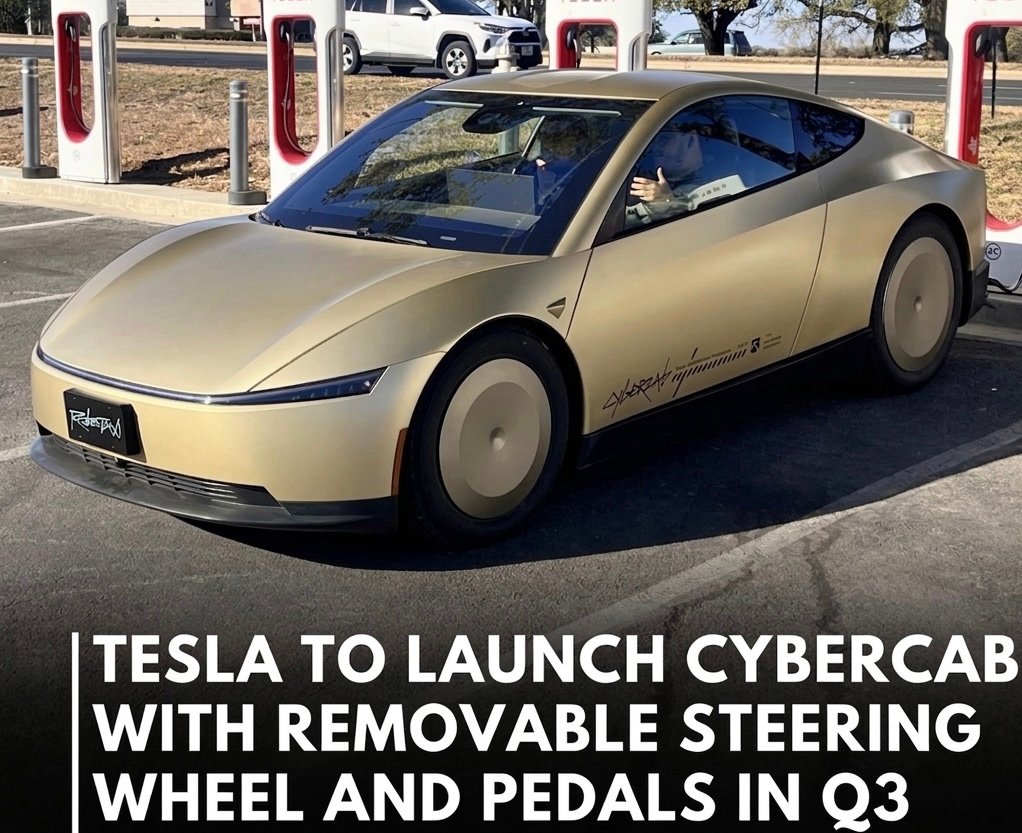
Tesla Cybercab: A Revolutionary Step Toward Fully Autonomous Driving
Tesla is once again pushing the boundaries of innovation with its upcoming Cybercab, a futuristic electric vehicle designed for autonomous driving. According to recent reports, Tesla plans to launch the Cybercab in Q2, featuring a removable steering wheel and pedals—a bold move that signals a major shift toward a driverless future.
With CEO Elon Musk leading the vision, Tesla aims to redefine mobility by eliminating the need for human control in everyday transportation.
🚀
What Is Tesla Cybercab?
The Tesla Cybercab is expected to be a robotaxi-style vehicle, designed primarily for autonomous ride-sharing. Unlike traditional cars, it focuses on:
- Full self-driving capability
- Minimalistic interior design
- No permanent driver controls
- AI-powered navigation
This vehicle is part of Tesla’s larger plan to build a global robotaxi network, where cars operate without drivers.
🔧
Removable Steering Wheel & Pedals – What It Means
One of the most talked-about features of the Cybercab is its removable steering wheel and pedals.
🔹 Why remove them?
- Signals confidence in autonomous technology
- Frees up cabin space for passengers
- Creates a lounge-like interior experience
🔹 How will it work?
The steering wheel and pedals may be:
- Optional add-ons for manual control
- Used only when required (testing or emergencies)
This concept represents a transition phase between manual driving and full automation.
🤖
Tesla’s Full Self-Driving (FSD) Technology
Tesla’s Cybercab will heavily rely on its advanced FSD system. The company has been continuously improving its AI-based driving system through:
- Real-world data collection
- Neural network training
- Over-the-air updates
Although FSD is not yet fully autonomous, Tesla claims it is moving closer to Level 4 or Level 5 autonomy.
⚠️
Challenges and Concerns
While the idea sounds futuristic, it also raises important concerns:
🚨
1. Safety
Can a car without permanent controls handle all real-world situations?
⚖️
2. Regulations
Most countries still require a steering wheel and pedals by law.
🧠
3. Public Trust
People may hesitate to trust fully autonomous vehicles initially.
🌍
Impact on the Automotive Industry
Tesla’s Cybercab could disrupt the entire auto industry.
🔹 Traditional Car Makers
Companies like Ford, Toyota, and BMW may need to accelerate their autonomous plans.
🔹 Ride-Sharing Platforms
Uber and Ola could integrate such vehicles to reduce costs.
🔹 Urban Mobility
Cities may see reduced traffic, fewer accidents, and more efficient transport systems.
📊
Why This News Is Going Viral
This story is trending because:
- It introduces a radical new car design
- Removes traditional driving controls
- Comes from Tesla, a highly influential brand
- Sparks debate about the future of driving
🔮
Future of Driverless Cars
The Cybercab represents a future where:
- Cars drive themselves
- Humans become passengers
- Transportation becomes safer and more efficient
Experts believe that within the next decade, autonomous vehicles could become mainstream.
🧠
Expert Opinion
Industry experts suggest:
- Tesla is ahead in software but still faces regulatory hurdles
- Removing steering controls is a bold but risky move
- Adoption will depend on safety performance and public acceptance
📌
Conclusion
Tesla’s Cybercab is not just another electric vehicle—it’s a glimpse into the future of transportation. With removable steering wheels and pedals, Tesla is challenging traditional norms and pushing toward a fully autonomous world.
While there are challenges ahead, one thing is clear: Tesla continues to lead innovation in the automotive space.